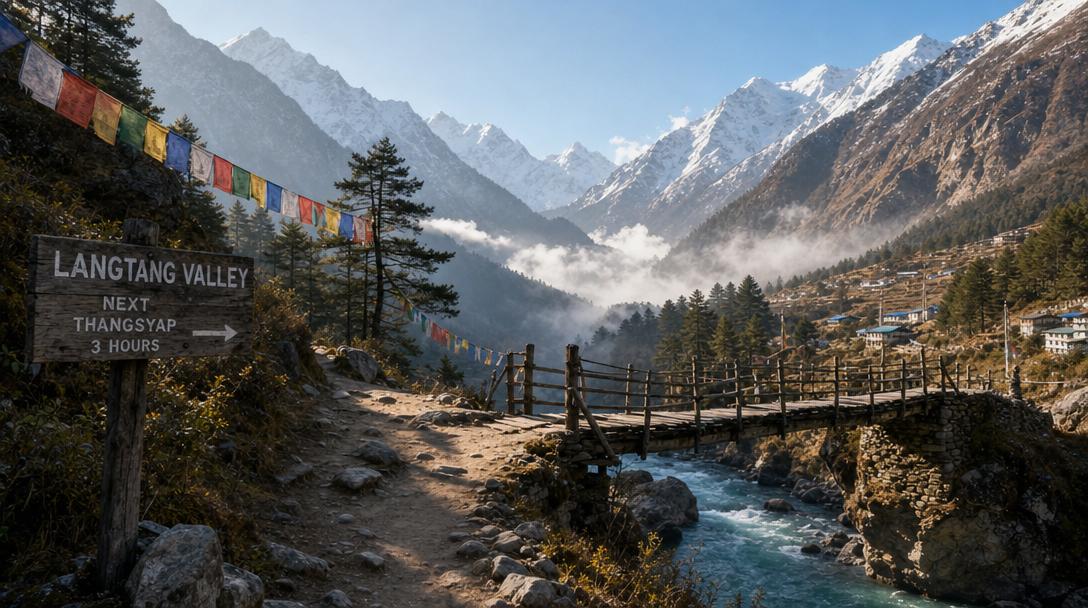
Langtang Valley’s trekking routes include the 7-day Kyanjin Gompa trek and the 14-day Langtang-Gosainkunda-Yala Peak circuit, offering diverse options for trekkers in 2026. These trails blend dramatic Himalayan vistas with cultural immersion, supporting local communities still recovering from the 2015 earthquake. Located just two days from Kathmandu, they provide accessible high-altitude adventures for time-constrained travelers.
The Bottom Line: Langtang Valley’s best routes require proper permits, acclimatization, and seasonal timing—but directly fund local recovery efforts while showcasing Nepal’s resilience.
Langtang Valley’s Top Trekking Routes in 2026
The Langtang Valley Trek to Kyanjin Gompa (7-8 days) remains the most popular, covering 60km from Syabru Besi with elevation gains to 3,870m. This route passes Tamang villages like Gatlang and Lama Hotel, ending at the sacred Kyanjin Gompa monastery. For extended adventures, the Langtang-Gosainkunda-Yala Peak circuit (14 days) combines high-altitude lake views at Gosainkunda (4,380m) with a non-technical summit of Yala Peak (5,500m)—a unique option explored in Nepal trekking vs climbing comparison. The Helambu Circuit (10 days) offers lush forests and cultural immersion in Sundarijal, peaking at 3,650m Chisapani.
Post-2015 reconstruction has improved trail safety, with reinforced stone paths and new teahouses in Syabru Besi and Kyanjin Gompa. However, landslides still affect routes near Langtang Village, emphasizing the need for updated route maps. Teahouse availability varies: budget travelers should prioritize reservations in smaller villages like Bamboo or Mundu, where capacity is limited.
Essential Permits and Acclimatization Strategies
Trekkers need two permits: the TIMS card and Langtang National Park entry slip, both covered in the Nepal trekking permit guide. Altitude sickness remains the #1 reason trekkers abandon Langtang routes. The rapid ascent from Lama Hotel (2,470m) to Kyanjin Gompa (3,870m) requires a rest day at Kyanjin or an extra overnight in Mundu for acclimatization. Medical facilities are sparse above Syabru Besi—carry a basic altitude sickness kit and understand Diamox usage per Nepal trekking health precautions.
Pro Tip: Carry a physical map even if you have GPS; satellite signals frequently fail in Langtang’s narrow valleys due to terrain interference.
Seasonal Considerations and Gear
The best trekking seasons are March-May (spring) and September-November (autumn), when rhododendrons bloom and skies are clear. Winter treks require microspikes and insulated gear, while monsoon rains (June-August) demand waterproof layers and patience for muddy trails. Kathmandu’s rental shops, listed in Nepal trekking gear rental, offer affordable options for boots, down jackets, and tents. Teahouse stays cost $10-20/night, with meals averaging $3-5. Book ahead during peak season, especially near Kyanjin Gompa, where lodges fill quickly.
Langtang’s Recovery and Cultural Significance
The 2015 earthquake destroyed 90% of Langtang Village, killing 350 residents. Reconstruction focused on seismic-resistant teahouses and relocating settlements to safer zones. By trekking here today, visitors directly fund community rebuilding efforts—for example, the new hydroelectric plant in Kyanjin Gompa was partially financed by tourism revenue. The valley’s Tamang people, identifiable by Tibetan-style dress and Buddhist traditions, welcome trekkers to their vibrant festivals like Losar (Tamang New Year) in February. Historically a trade corridor between Nepal and Tibet, Langtang’s trails now symbolize resilience—where cracked cliffs from landslides stand as stark reminders of nature’s power, and teahouse owners share stories of survival over steaming bowls of dal bhat.
Frequently Asked Questions
What are the main trekking routes available in Langtang Valley for 2026?
The primary trekking routes in Langtang Valley include the 7-day Kyanjin Gompa trek and the 14-day Langtang-Gosainkunda-Yala Peak circuit. Another option is the 10-day Helambu Circuit, which features lush forests and cultural immersion.
What permits are required for trekking in Langtang Valley?
Trekkers need two permits: the TIMS card and the Langtang National Park entry slip. These permits are essential for accessing the trekking routes in the region.
What are the best times of year to trek in Langtang Valley?
The best trekking seasons are March-May (spring) and September-November (autumn). During these periods, trekkers can expect clear skies and, in spring, blooming rhododendrons.
How has the 2015 earthquake impacted Langtang Valley trekking?
The 2015 earthquake caused significant damage, destroying 90% of Langtang Village. Reconstruction efforts have improved trail safety with reinforced paths and new teahouses, and trekking directly supports the community's rebuilding efforts.
What are some strategies for acclimatization on Langtang Valley treks?
Due to rapid elevation gains, it's recommended to take a rest day at Kyanjin Gompa or an extra overnight in Mundu for acclimatization. Carrying a basic altitude sickness kit and understanding Diamox usage is also advised.
What kind of cultural experiences can trekkers expect in Langtang Valley?
Trekkers can immerse themselves in the culture of the Tamang people, who are identifiable by their Tibetan-style dress and Buddhist traditions. Visitors may also experience vibrant festivals like Losar (Tamang New Year) in February.