
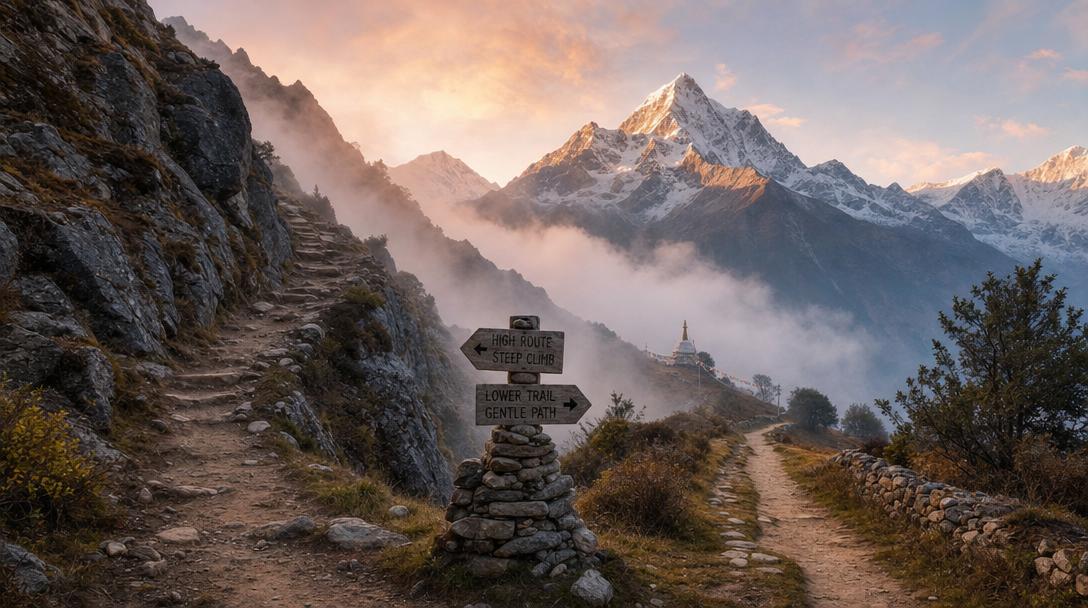
In Nepal, the Annapurna South Base Camp sits at 6,800 meters—easily reachable by fit trekkers, yet just a stone's throw from 8,000-meter summits reserved for elite climbers. Whether you're aiming to stroll through Himalayan villages or conquer a technical peak, Nepal offers both experiences. This article breaks down the critical differences between trekking and climbing expeditions to help you decide which aligns with your goals, budget, and experience level in 2026.
Overview
Trekking in Nepal
Trekking in Nepal involves multi-day hikes through mountain trails, often staying in teahouses or lodges. It requires moderate fitness and basic gear, with routes like the Annapurna Circuit offering immersive cultural experiences alongside dramatic landscapes. The primary strength lies in accessibility—trekkers can explore high-altitude regions like the Langtang Valley without technical climbing skills or permits.
Climbing in Nepal
Climbing in Nepal targets peaks categorized as trekking peaks (e.g., Island Peak) or expedition peaks (e.g., Annapurna South). These require technical skills, specialized equipment, and permits from the Nepal Mountaineering Association. The appeal is clear: standing atop a Himalayan summit is a bucket-list achievement for experienced adventurers, with routes demanding ice axe proficiency, altitude acclimatization, and often fixed ropes or crampons.
Key Differences
| Feature | Trekking | Climbing |
|---|---|---|
| Difficulty | Moderate (fitness-focused) | High (technical skills) |
| Permits | Limited (TIMS, national park) | Mandatory (peak-specific) |
| Cost | $500–$1,500 | $3,000–$30,000+ |
| Duration | 7–21 days | 21–60 days |
| Best For | Scenic immersion, culture | Summit achievements |
The most critical difference is accessibility. Trekking routes like the Everest Base Camp require minimal technical expertise, while climbing demands months of preparation. Trekking permits are cheaper and easier to obtain, but climbing offers rarefied experiences for those willing to invest time and money.
Quick Take: Trekking suits budget-conscious adventurers prioritizing scenery and culture. Climbing rewards those seeking technical challenges and summit bragging rights.
Strengths and Weaknesses
Trekking Strengths
Nepal's teahouse trekking routes, such as the Langtang Valley Trek, provide unparalleled cultural access. You'll pass through Sherpa villages, visit ancient monasteries, and enjoy meals in family-run lodges. Costs remain low—$30/day covers food and accommodation—and gear rentals are widely available in Kathmandu's Thamel district. Altitude exposure is gradual, reducing acute mountain sickness (AMS) risks compared to climbing.
Trekking Weaknesses
Trekking carries altitude risks despite gradual acclimatization—mild AMS affects 25% of Everest Base Camp trekkers annually. Remote routes like the Dolpo region require domestic flights vulnerable to weather delays, and teahouse infrastructure becomes sparse above 4,500 meters. Unlike climbing expeditions, trekkers cannot access restricted summit zones or technical ridgelines.
Climbing Strengths
Climbing Nepal's 5,800–7,000-meter trekking peaks (e.g., Mera Peak) or 8,000+ expedition peaks (e.g., Lhotse) delivers unmatched personal achievement. Technical routes build skills in ice climbing, crevasse navigation, and high-altitude endurance. Smaller groups ensure quieter experiences, and summit days often reveal untouched vistas inaccessible to trekkers.
Climbing Weaknesses
Cost and complexity dominate. Climbing permits alone for Island Peak ($350) or Annapurna South ($1,200) dwarf trekking fees. Training requires months of gym sessions and prior high-altitude experience. Risks like avalanches, serac collapses, and severe frostbite remain ever-present, even on "easier" peaks.
Which One Should You Choose?
Choose trekking if you prioritize affordability, cultural immersion, and moderate fitness challenges. The Annapurna Base Camp Trek offers a perfect blend of scenery and accessibility. Choose climbing if you're an experienced mountaineer with a specific summit goal and budget flexibility. For 2026, climbing Mera Peak ($2,500–$4,000) is a gateway to higher expedition peaks.
Our Recommendation: Most travelers should start with trekking. The Manaslu Circuit combines remote beauty and manageable difficulty, making it ideal for first-timers.
The decision hinges on your risk tolerance and desire for technical challenges. For trekking, focus on health precautions to mitigate AMS. For climbing, secure permits through the Nepal Mountaineering Association and commit to rigorous training. Either choice guarantees a transformative Himalayan adventure in 2026.
Frequently Asked Questions
What is the main difference between trekking and climbing in Nepal?
The main difference lies in accessibility and technical skill requirements. Trekking involves multi-day hikes on trails, requiring moderate fitness, while climbing targets specific peaks and demands technical skills, specialized equipment, and permits.
What are the typical costs associated with trekking versus climbing in Nepal?
Trekking in Nepal is generally more affordable, costing between $500 and $1,500. Climbing expeditions are significantly more expensive, ranging from $3,000 to over $30,000 due to specialized gear, permits, and longer durations.
How long do trekking and climbing expeditions usually last in Nepal?
Trekking trips typically last between 7 and 21 days. Climbing expeditions are generally much longer, ranging from 21 to 60 days, depending on the peak and route.
What kind of permits are needed for trekking in Nepal?
Trekking in Nepal requires limited permits, such as the TIMS card and national park entry permits. These are generally cheaper and easier to obtain compared to climbing permits.
Which activity is better for experiencing Nepalese culture?
Trekking is ideal for cultural immersion, as routes often pass through Sherpa villages and allow trekkers to stay in family-run teahouses. This provides direct interaction with local communities and their traditions.
What are the primary risks associated with trekking in Nepal?
Despite gradual acclimatization, altitude sickness (AMS) is a risk, affecting about 25% of Everest Base Camp trekkers annually. Remote routes can also be affected by weather-related flight delays, and infrastructure can be sparse at higher altitudes.
What are some examples of trekking peaks and expedition peaks in Nepal?
Trekking peaks include mountains like Island Peak and Mera Peak, which are less technically demanding than expedition peaks. Expedition peaks, such as Annapurna South or Lhotse, are higher and require advanced mountaineering skills.
What is the recommended starting point for most travelers interested in the Himalayas?
Most travelers are advised to start with trekking due to its affordability, cultural immersion, and moderate fitness requirements. The Manaslu Circuit is recommended for first-timers, offering remote beauty and manageable difficulty.