
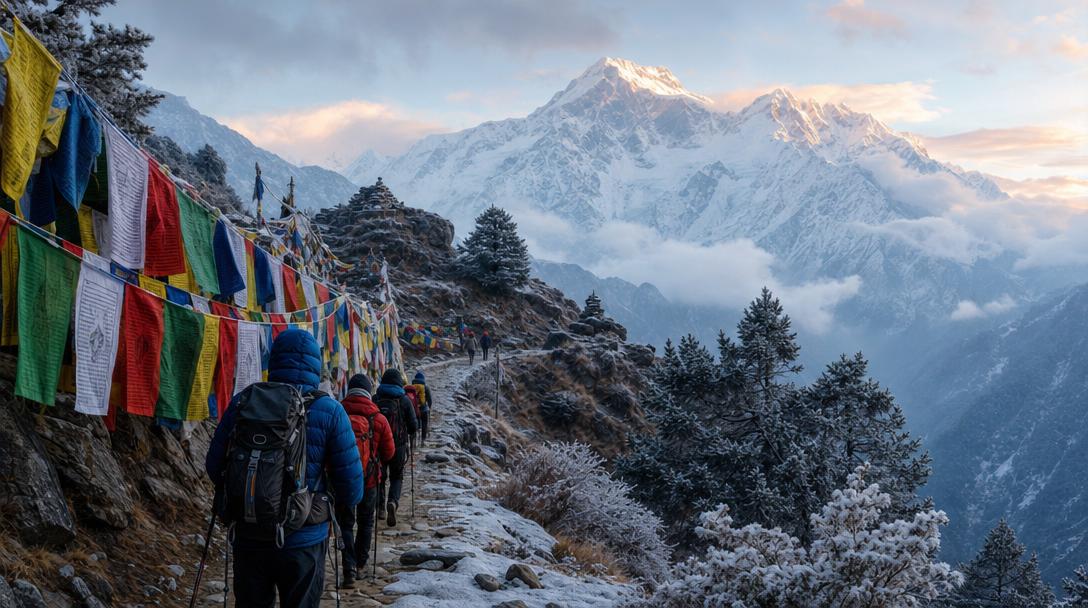
Annapurna Base Camp sits at the foot of the world’s deadliest mountain, claiming one climber’s life for every three who reach its summit. Yet this 9-day trek through Nepal’s Annapurna Sanctuary remains a bucket-list adventure for its unparalleled views of Machhapuchhre and Annapurna South, accessible from Pokhara’s lakeside charm.
Pack Thermal Layers for Sub-Zero Nights at 13,550 Feet
The final ascent to Annapurna Base Camp (13,550 ft) crosses glacial moraines where nighttime temperatures routinely dip below freezing, even in October. In 2024, a German trekker suffered hypothermia after wearing cotton socks, which retain moisture. Your base layer must be merino wool or synthetic. Avoid cotton entirely—hypothermia risks are real.
Book Helicopter Evacuation Insurance Before Starting
Landslides block trails annually, and avalanches kill climbers near the base camp. In 2023, a snowstorm trapped 40 trekkers, requiring emergency evacuations. Choose agencies offering free helicopter coverage—premiums start at $35 and cover rescues from Annapurni South’s avalanche zones.
Choose Pokhara-Based Agencies for Better Permit Access
Pokhara’s Trek Expert Network handles TIMS card registrations faster than Kathmandu-based operators. Authorities at Birethanti checkpoint enforce permit rules strictly—fines reach NPR 5,000 for non-compliance. Local agencies like Himalayan Guides Nepal offer shared guide services at 70% less than private hires.
Pro Tip: Carry printed TIMS documentation even if your guide keeps originals. Photo copies often fail inspections.
Acclimatize at Deurali’s Teahouses, Not Base Camp
The final push from Deurali (12,000 ft) to Annapurna Base Camp gains 1,550 vertical feet in 3 hours. In 2024, a solo traveler from Australia developed severe AMS after skipping rest days. Sleep at Deurali’s teahouses to adjust to altitude—your blood oxygen levels stabilize faster at this elevation.
Avoid April for Trekking—Blizzards Lurk Until May
April 2025’s unseasonal blizzard stranded 200 trekkers between Chhomrong and Annapurna Base Camp. Book in October or November when trails are clearest. Carry chemical hand warmers and a waterproof shell—sudden storms can dump 12 inches of snow overnight.
Poon Hill’s Sunrise Outshines Base Camp Views
The 3,210-meter viewpoint en route to Ghorepani offers arguably better Annapurna massif vistas than the base camp itself. Arrive by 5:30 AM to beat crowds from Pokhara’s paragliding tours. The detour adds two days but rewards with 360-degree panoramas of Hiunchuli and Machhapuchhre.
Skip Porters—Tea Houses Carry Supplies Efficiently
Annapurna’s 18 teahouse clusters have larger kitchens than Everest’s route, reducing porter reliance. In 2023, a UK group saved 40% on porter fees by using tea house meal plans. Book accommodations in advance during peak season (March–May) to secure beds.
Watch for Snow Leopards in Annapurna’s Lower Forests
The Annapurna region hosts 117 mammal species, including snow leopards and Himalayan thars. Rhododendron forests near Chitwan contrast sharply with Everest’s barren slopes. Combine this trek with Chitwan’s jungle safaris for a complete Nepal wildlife experience.
Did You Know: Annapurna’s trail has 18 teahouse clusters with flush toilets, while Everest’s route has just five.
Prioritize Local Guides for Hidden Route Knowledge
In 2022, a group of Europeans ignored trail markers near Annapurna South, spending a night at 14,000 ft without shelter. Certified Sherpa guides carry GPS devices and know emergency exit routes. Book with agencies that provide dexamethasone injections and Gamow bags.
Compare Annapurna’s 9-Day Trek to Everest’s 14-Day Minimum
While Everest Base Camp reaches higher elevation (17,598 ft), Annapurna’s shorter acclimatization period suits novices. For your first Himalayan trek, Annapurna’s 9-day itinerary demands less time off work than Everest. Save money by choosing Pokhara-based operators.
Annapurna’s raw beauty and survival challenges demand preparation. Book consultations with Pokhara’s Trek Expert Network by January 2026 to secure guides during peak season. Focus on gear, acclimatization, and local expertise to transform a survival challenge into a life-changing journey.
Frequently Asked Questions
What is the maximum altitude reached during the Annapurna Base Camp trek?
The Annapurna Base Camp trek reaches a maximum altitude of 13,550 feet (4,130 meters). Nighttime temperatures at this elevation can drop below freezing, even in October.
What type of clothing is recommended for the Annapurna Base Camp trek?
It is crucial to pack thermal layers made of merino wool or synthetic materials for the Annapurna Base Camp trek. Cotton clothing should be avoided entirely due to the risk of hypothermia in sub-zero temperatures.
Why is helicopter evacuation insurance important for the Annapurna Base Camp trek?
Helicopter evacuation insurance is vital due to the risks of landslides and avalanches in the Annapurna region. In 2023, a snowstorm trapped 40 trekkers, highlighting the need for emergency evacuation coverage.
Which months are best for trekking to Annapurna Base Camp?
The best months for trekking to Annapurna Base Camp are October or November, when trails are clearest. April should be avoided due to the risk of unseasonal blizzards.
Is it better to book a trekking agency in Pokhara or Kathmandu for the Annapurna Base Camp trek?
It is advisable to choose Pokhara-based agencies for the Annapurna Base Camp trek, as they can process TIMS card registrations faster. Local agencies also offer shared guide services at a lower cost.
Where should trekkers acclimatize before reaching Annapurna Base Camp?
Trekkers should acclimatize at Deurali's teahouses, located at 12,000 feet, rather than pushing directly to Base Camp. Sleeping at this elevation helps blood oxygen levels stabilize faster, reducing the risk of Acute Mountain Sickness (AMS).
Are porters necessary for the Annapurna Base Camp trek?
Porters are not strictly necessary for the Annapurna Base Camp trek because the region has 18 teahouse clusters with larger kitchens that efficiently carry supplies. Trekkers can save on porter fees by utilizing teahouse meal plans.
What wildlife can be seen in the Annapurna region?
The Annapurna region is home to 117 mammal species, including snow leopards and Himalayan thars. These animals can be found in the lower forests, particularly the rhododendron forests near Chitwan.