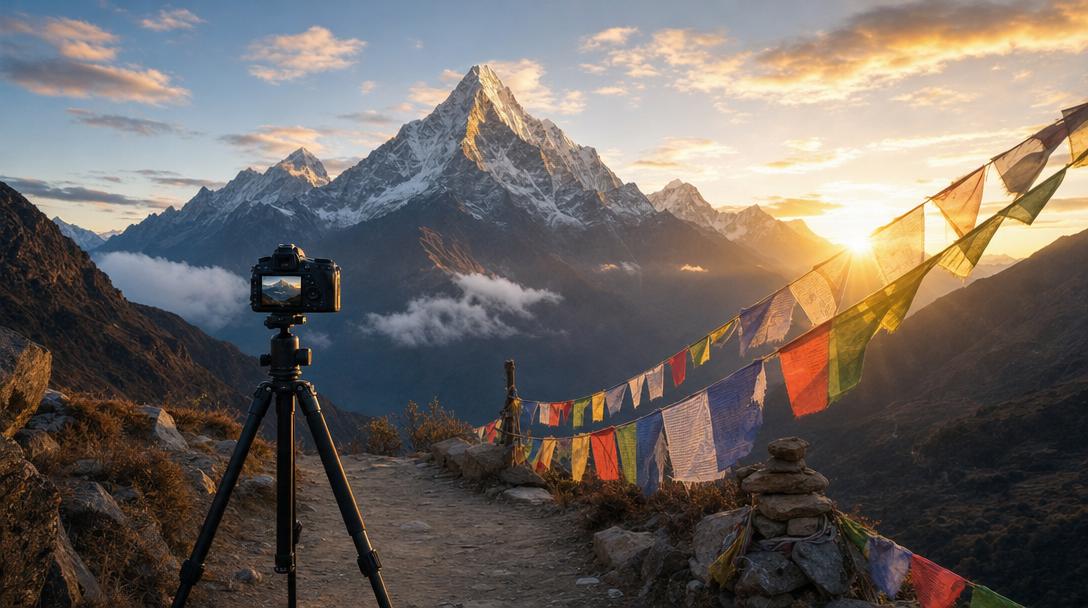
A single frame of Annapurna South Face lit by dawn's first light can take a photographer years to capture—but in Nepal, the opportunities to create such moments are endless. Adventure photography tours here demand technical skill, cultural sensitivity, and strategic planning to navigate high-altitude challenges and crowded trails.
Capture Himalayan Sunrise on Annapurna Circuit
The Annapurna Circuit's Thorong La Pass viewpoint offers one of the most dramatic sunrise compositions in Nepal. Arrive 90 minutes before dawn to secure positioning at Muktinath's prayer flag clusters. Use a telephoto lens (70-200mm) to compress layers of snow-capped ridges against morning mist. Many photographers fail to account for blue hour's short duration at 3,800 meters—test exposure settings during pre-dawn twilight.
Pro Tip: Pack lens cloths in multiple pockets. Moisture from rapid temperature changes between freezing mornings and midday heat can fog optics unexpectedly.
Navigate High-Altitude Gear Challenges
Carrying 15kg of photography equipment becomes exponentially harder above 4,000 meters. The Annapurna Base Camp trail's final ascent to 4,190 meters punishes underprepared gear. Rent yak-hide camera covers in Manang (from NPR 500/day) to protect against sudden hailstorms. Test battery performance at elevation—Li-ion batteries lose 30% capacity above 5,000m.
Did You Know: Nepal's 1,310km Himalayan range contains 8 of the 14 highest peaks globally, creating unique atmospheric conditions that affect white balance.
Photograph Prayer Flags on the Manaslu Trail
The Manaslu Circuit's Buri Gandaki Gorge contains the densest concentration of prayer flag poles in Nepal. Shoot during mid-morning winds (typically 10-15 km/h) to avoid blurred fabric. Frame flags against contrasting mountain backgrounds like the 7,795m Manaslu itself. Many tourists unknowingly violate local customs by stepping between prayer flag lines—always walk around these sacred installations.
Respect Cultural Etiquette at Pashupatinath Temple
Kathmandu's Pashupatinath Temple offers unmatched opportunities for cultural photography, but strict rules apply. Cover shoulders and knees when photographing Hindu rituals along the Bagmati River. Never point your lens at priests performing pujas. The best shots come from wide-angle compositions (16-35mm) capturing pilgrims' offerings against temple spires.
Document Yak Caravans in Mustang
Upper Mustang's Lo Manthang region hosts the last trans-Himalayan salt trade routes. Arrive before 8 AM to photograph yaks crossing the Kali Gandaki Gorge's suspension bridges. Use shutter speeds above 1/500s to freeze motion when animals are moving. Local guides charge NPR 2,000/day for yak caravan access—negotiate fees through Nepal adventure tour operators to avoid disputes.
Avoid Crowds at Poon Hill
Poon Hill's 360-degree mountain views attract 500+ daily trekkers during peak season. For solitude, book a 4 AM slot through Ghorepani lodge owners (NPR 3,500 extra fee) to access the viewpoint before sunrise crowds arrive. Use ND grads to balance foreground silhouettes against sky gradients.
Leverage Local Guides for Hidden Gems
Professional Nepali photography guides charge between NPR 2,500-4,000/day but know secret locations like the hidden viewpoint above Ghandruk village. These spots offer unobstructed Annapurna South Face compositions without the standard trail congestion. Always negotiate guide fees through Nepal adventure solo travel guide resources to ensure fair rates.
Plan Around Adventure Sports Festivals
The Nepal adventure sports festivals calendar creates unique photo opportunities. The Khaptad Foothills Ultramarathon (March) and Pokhara Paragliding Festival (October) offer action shots against dramatic backdrops. Book accommodations 6 months in advance for October events, as lakeside hotels sell out by May.
Backup Storage Solutions for Remote Areas
In Mustang's Kagbeni village, internet speeds top 15Mbps at the Royal Mustang Resort—use this window to offload 4K footage. Carry 3 physical backups: primary SSD, secondary SD card wallet, and a sacrificial microSD in your drone. Many photographers lose data from relying solely on cloud storage in low-connectivity regions.
Optimize Post-Processing for Mountain Landscapes
Nepal's high-altitude light creates harsh shadows that require careful dodging in post. Use Luminar Neo's AI Sky Replacement to enhance washed-out Himalayan skies. Process RAW files at 300% zoom to check for sharpening artifacts caused by atmospheric haze above 4,500 meters.
The best Nepal adventure photography merges technical preparation with cultural awareness. While equipment matters, the most compelling images come from respecting local traditions and leveraging insider knowledge. Start planning your trip through Nepal adventure tour operators that include insurance coverage for photography equipment.
Frequently Asked Questions
What equipment is recommended for capturing sunrise on the Annapurna Circuit?
A telephoto lens (70-200mm) is recommended to compress layers of snow-capped ridges against morning mist. Photographers should also test exposure settings during pre-dawn twilight to account for blue hour's short duration at high altitudes.
How can photographers protect their gear from the elements in Nepal?
Photographers can rent yak-hide camera covers in Manang to protect against sudden hailstorms. It's also advisable to pack lens cloths in multiple pockets to combat moisture from rapid temperature changes.
What cultural etiquette should photographers observe at Pashupatinath Temple?
When photographing Hindu rituals along the Bagmati River, photographers should cover their shoulders and knees. It is also important never to point a lens at priests performing pujas, and to use wide-angle compositions to capture pilgrims' offerings.
How can photographers avoid crowds at Poon Hill for sunrise views?
To avoid crowds at Poon Hill, photographers can book a 4 AM slot through Ghorepani lodge owners for an extra fee. This allows access to the viewpoint before sunrise crowds arrive, offering a more solitary experience.
What are some tips for photographing yak caravans in Upper Mustang?
To photograph yak caravans, arrive before 8 AM to capture them crossing suspension bridges. Use shutter speeds above 1/500s to freeze motion, and negotiate guide fees through Nepal adventure tour operators for access.
How does high altitude affect camera battery performance?
Li-ion batteries can lose 30% of their capacity when used above 5,000 meters. It is important to test battery performance at elevation to ensure they function adequately.
What is the best way to photograph prayer flags on the Manaslu Trail?
Shoot during mid-morning winds, typically 10-15 km/h, to prevent blurred fabric. Frame the flags against contrasting mountain backgrounds like the 7,795m Manaslu, and always walk around sacred prayer flag installations.
Why is it important to have multiple backup storage solutions in remote areas of Nepal?
In remote areas with low connectivity, relying solely on cloud storage can lead to data loss. It's recommended to carry three physical backups, such as a primary SSD, a secondary SD card wallet, and a sacrificial microSD.